
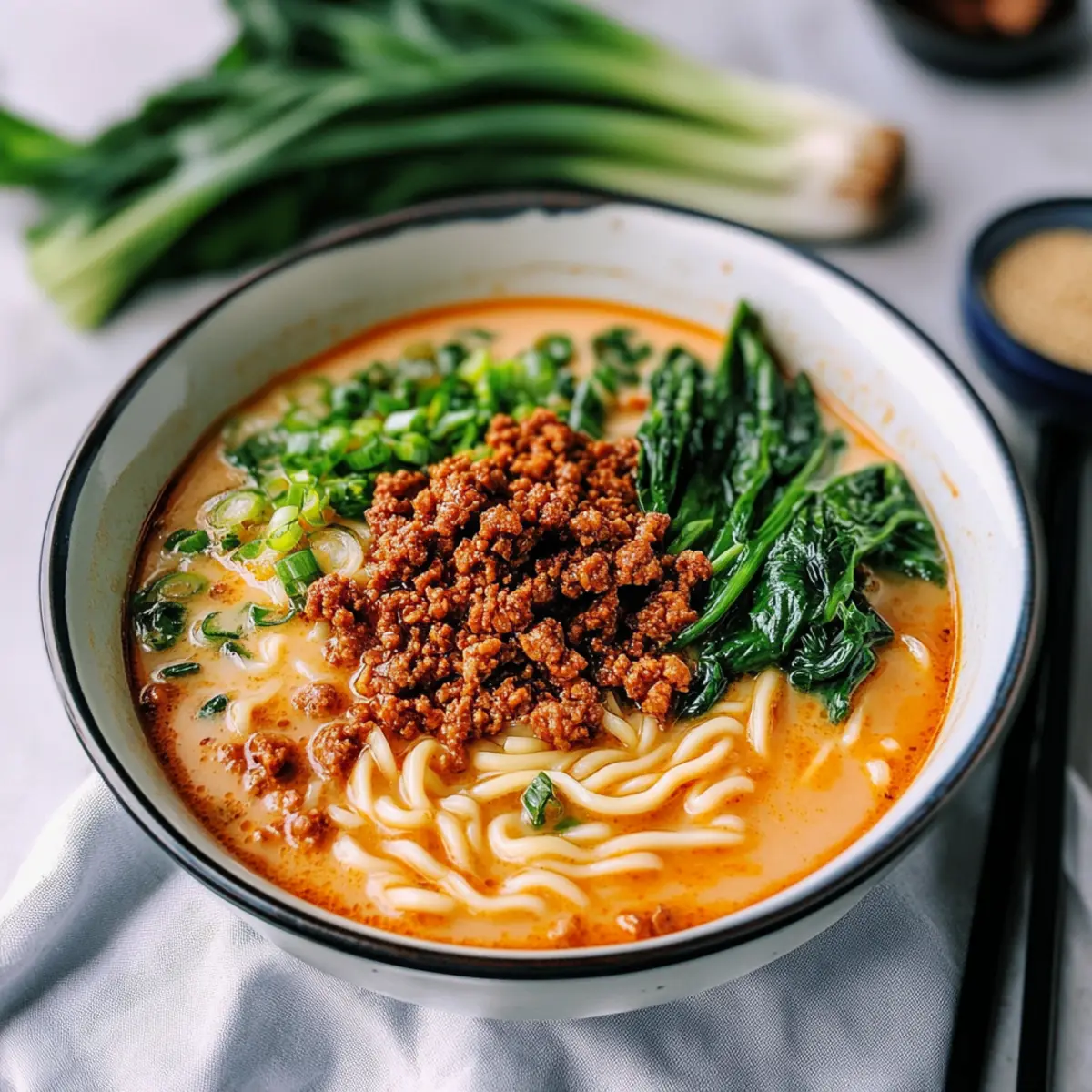
As I stood at my kitchen counter, the aroma of sizzling pork wafted through the air, instantly transporting me to a bustling ramen shop. Today, I’m excited to share my version of Spicy Tan Tan Ramen—a delightful fusion of Japanese and Chinese flavors that warms both the body and soul. This easy-to-make dish is a comforting bowl of noodles swimming in a rich, creamy broth, flavored with toasted sesame and a kick of Sichuan spice. Not only is it a crowd-pleaser, but it also allows you to customize the spice level to suit your palate. So, are you ready to ditch the takeout and dive into this savory homemade experience?
Why Choose Spicy Tan Tan Ramen?
Comforting, this bowl combines the best of both worlds, providing rich flavors and bold spices that excite your taste buds. Customizable spice levels allow you to tailor this dish to your comfort zone, making it perfect for everyone—from spice novices to heat aficionados. Easy to make, you can whip up this ramen in no time, making it a great option for busy weeknights. Versatile ingredients mean you can swap proteins and greens based on what you have at home, enhancing its appeal. For those craving something more adventurous, don’t forget to check out my delicious Tso Meatball Ramen that showcases a similar fusion flair!
Tan Tan Ramen Ingredients
For the Broth
• Chicken Stock – The base for a rich, flavorful soup; homemade stock is ideal for depth.
• Unsweetened Oat Milk or Soy Milk – Adds creaminess without dairy; choose regular milk if desired.
• Rice Vinegar – Provides acidity to balance flavors; optional if you prefer a less tangy broth.
For the Meat
• Ground Pork – Adds protein and richness to the dish; can substitute with ground chicken or turkey.
For the Sauce and Seasoning
• Soy Sauce – Enhances umami depth in the broth; use tamari for a gluten-free option.
• Sesame Paste – Thickens the broth and imparts a nutty flavor; peanut butter can work as a substitute.
• Sugar – Balances savory elements; consider honey or maple syrup as alternatives.
• Mirin – Adds sweetness and elevates the pork flavors; replace it with dry sherry mixed with a pinch of sugar.
• Spicy Bean Sauce (Sichuan doubanjiang) – Provides signature heat and complexity; can be omitted for a milder flavor.
For the Aromatics
• Ginger (minced) – Infuses aromatic spice and warmth; fresh ginger is best for optimal flavor.
• Garlic (minced) – Elevates the overall taste; using fresh garlic ensures maximum flavor.
For the Garnish and Noodles
• Fresh Ramen Noodles – Essential for an authentic ramen experience; you can use dried noodles, but the texture may vary.
• Leafy Greens (spinach, baby bok choy, or yu choy) – Adds color, nutrition, and texture; choose any fresh greens based on availability.
• Scallions (chopped) – Fresh garnish adding crunch and flavor; shallots can be an effective alternative.
For Serving
• Chili Oil – Provides heat and flavor enhancement; homemade chili oil adds authenticity.
• Optional Toppings – A sprinkle of sesame seeds or additional scallions can enhance the visual plate.
Dive into this Tan Tan Ramen recipe, and enjoy a homemade bowl that rivals your favorite ramen shop!
Step‑by‑Step Instructions for Tan Tan Ramen
Step 1: Marinate the Pork
Start by marinating 1 pound of ground pork with 2 tablespoons of mirin and 1 tablespoon of minced ginger. Allow the mixture to sit for about 15 minutes while the flavors meld together. This step infuses the pork with sweetness and warmth, setting the stage for your delicious spicy Tan Tan Ramen.
Step 2: Prepare the Tare
In a bowl, whisk together 3 tablespoons of soy sauce, 2 tablespoons of sesame paste, 1 tablespoon of rice vinegar, 1 teaspoon of sugar, and 1 tablespoon of chili oil until you achieve a smooth consistency. This spicy tare serves as the flavor base for your Tan Tan Ramen, adding depth and richness to the broth.
Step 3: Simmer the Broth
In a large pot, combine 4 cups of chicken stock and 1 cup of unsweetened oat milk. Bring the mixture to a low simmer over medium heat, ensuring it doesn’t boil. Stir occasionally to blend the flavors, as this creamy broth forms the comforting heart of your Tan Tan Ramen.
Step 4: Blanch the Greens
While the broth simmers, bring a separate pot of water to a rolling boil. Add your choice of leafy greens, such as spinach or baby bok choy, and blanch them for about 30-60 seconds until vibrant and slightly tender. Remove the greens and set them aside to prevent overcooking, preserving their color and nutrition.
Step 5: Cook the Pork
Heat a wok over medium-high heat and add 2 tablespoons of vegetable oil. Once the oil is shimmering, add the marinated pork and cook until browned and crispy, about 5-7 minutes. Then, stir in 2 tablespoons of spicy bean sauce and 2 minced garlic cloves, cooking for an additional minute before removing from heat. This step adds a smoky flavor and enhances the spice profile of your Tan Tan Ramen.
Step 6: Cook the Noodles
In a separate pot, cook your fresh ramen noodles according to package instructions until al dente, typically about 3-4 minutes. Drain the noodles and set them aside, ensuring they’re perfectly cooked to carry all the delicious flavors of the Tan Tan Ramen.
Step 7: Assemble the Bowls
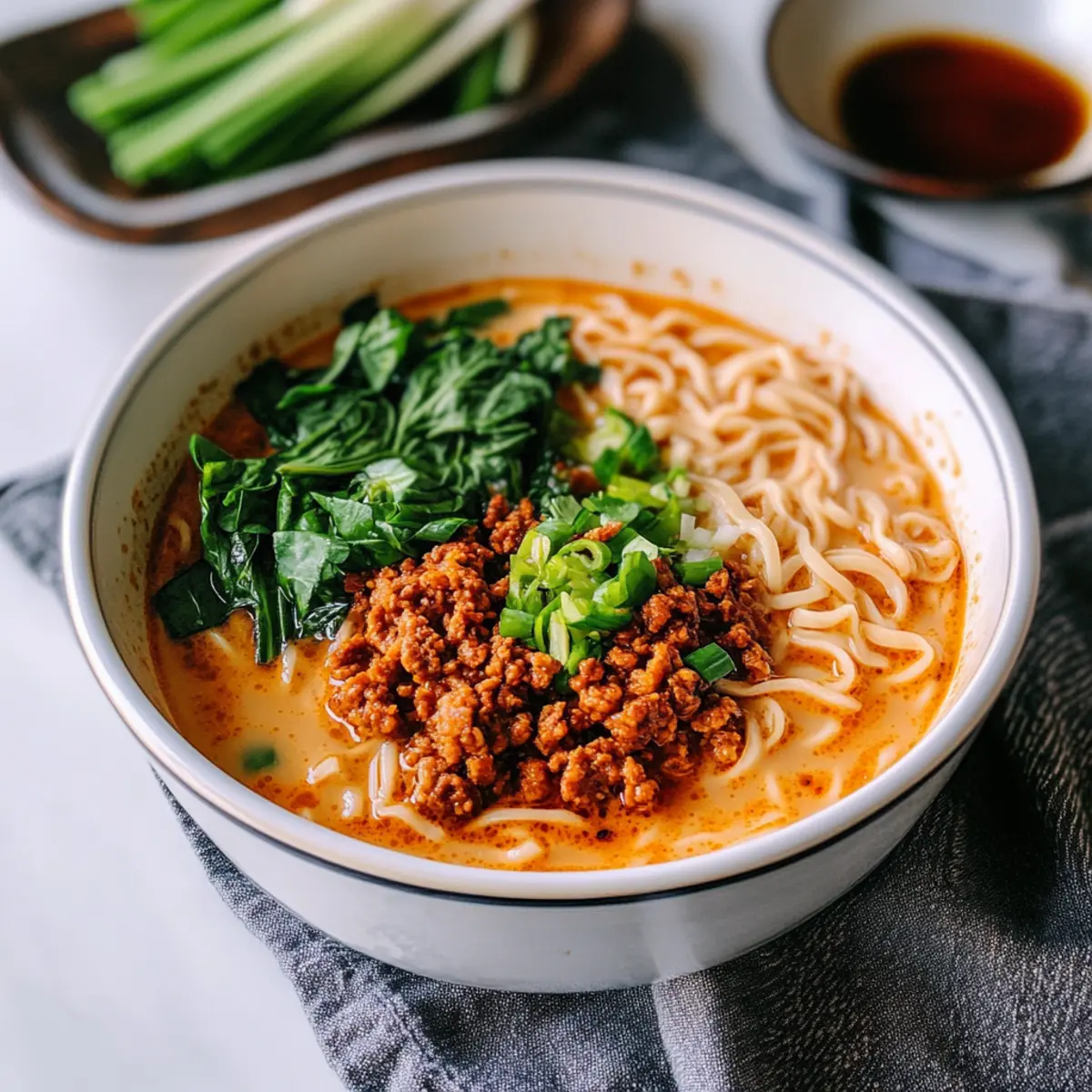
To serve your inviting Tan Tan Ramen, ladle half of the prepared tare into each bowl. Pour the hot broth over the tare, then add a serving of noodles. Top with the crispy pork, blanched greens, and finish with chopped scallions and an extra drizzle of chili oil, if desired. Your comforting and spicy bowl is now ready to be enjoyed!
Tan Tan Ramen Variations & Substitutions
Feel free to unleash your creativity and customize this recipe to suit your unique taste buds!
-
Protein Switch: Substitute ground pork for ground beef, chicken, or even tofu for a tasty vegetarian option. Each protein offers a different flavor profile to explore.
-
Leafy Greens Twist: Experiment with various leafy greens or even toss in some mushrooms. This not only adds nutrition but also introduces diverse flavors and textures to your bowl.
-
Spicy Levels: Amp up or dial down the heat by adjusting the amount of spicy bean sauce and chili oil. Taste as you go to find your perfect balance.
-
Gluten-Free: Use gluten-free noodles or tamari instead of soy sauce to cater to gluten sensitivities without losing flavor.
-
Nut-Free Creaminess: If you prefer, substitute sesame paste with sunflower seed butter for a nut-free but equally creamy broth.
-
Fresh Herb Boost: Add fresh herbs like cilantro or Thai basil on top for a burst of freshness and added flavor complexity.
-
Citrus Zest: A squeeze of lime or lemon juice right before serving can brighten the flavors, adding a refreshing twist to your comforting ramen.
-
Chili Garlic Oil: Make your own infused chili garlic oil for a robust flavor kick. It’ll add a fragrant heat that enhances the overall dish beautifully.
If you’re feeling adventurous, don’t miss my delightful Tso Meatball Ramen that showcases a similar fusion flair or the warm comfort of my Tso Meatball Ramen for extra inspiration!
What to Serve with Spicy Tan Tan Ramen
As you prepare this vibrant bowl of spicy noodles, consider these delightful pairings that will elevate your meal and delight your senses.
-
Edamame: A simple yet satisfying side that adds a pop of color and healthy protein, making it a perfect match for ramen.
-
Pickled Vegetables: These tangy bites cut through the richness of the broth, providing a refreshing contrast with every slurp.
-
Crispy Spring Rolls: Their crunchy texture and savory filling complement the creamy noodles beautifully, completing the Asian-inspired dining experience.
-
Miso Soup: A warm and umami-rich companion, miso soup enhances the overall flavor journey while adding a comforting touch.
-
Sesame Spinach Salad: This salad offers a fresh, light crunch that balances the spicy richness of the ramen with nutty hints of sesame.
-
Ginger Tea: Sipping on this warm, soothing beverage after your ramen can aid digestion, and its spice aligns perfectly with the meal’s profile.
-
Chocolate Mochi: For dessert, these chewy rice cakes provide a delightful sweet ending; their subtle sweetness contrasts with the savory bowl of ramen.
Each pairing not only complements the spicy Tan Tan Ramen but also brings together an array of flavors and textures that warm the heart and soul. Enjoy crafting your perfect meal!
Expert Tips for Tan Tan Ramen
-
Quality Ingredients: Use the best possible ground pork for enhanced richness. Fresh ramen noodles also make a noticeable difference in texture and taste.
-
Marination Matters: Allow the pork to marinate long enough—15 minutes is ideal—to fully absorb the flavors of mirin and ginger, enhancing your Tan Tan Ramen.
-
Watch the Heat: When simmering the broth, keep it at a low temperature to prevent curdling the oat milk.
-
Customize Spice: Adjust the amount of chili oil and spicy bean sauce to suit your heat preference. Start with less, as it’s easier to add than to take away.
-
Don’t Overcook Greens: Blanch the leafy greens just until vibrant and tender. This step maintains their nutrition and color, adding a beautiful touch to your Tan Tan Ramen.
How to Store and Freeze Tan Tan Ramen
Fridge: Store leftovers in an airtight container for up to 3 days. Make sure to separate the noodles from the broth to keep them from getting mushy.
Freezer: For longer storage, freeze the broth and pork mixture in airtight containers for up to 3 months. Reheat thoroughly before serving, adding fresh noodles.
Reheating: Gently reheat the broth on the stove over low heat to preserve the flavors. Add cooked noodles just before serving to maintain their texture.
Leftover Elements: If you have leftover greens or garnishes, store them separately in the fridge and add fresh before serving your Tan Tan Ramen.
Make Ahead Options
These Spicy Tan Tan Ramen are perfect for busy weeknights! You can marinate the ground pork up to 24 hours in advance, allowing the flavors to fully develop. Additionally, prepare the tare sauce and store it in the refrigerator for up to 3 days. Blanch your leafy greens ahead of time and keep them in an airtight container to preserve their vibrant color. When it’s time to enjoy your ramen, simply heat the broth, cook the noodles fresh (they only take a few minutes), and assemble the bowls with the prepped components for a cozy, hearty meal that feels just as delicious as if you made everything from scratch that day!
Spicy Tan Tan Ramen Recipe FAQs
What type of pork is best for Tan Tan Ramen?
Absolutely! I recommend using ground pork for its richness and flavor; it truly elevates the dish. If you’re looking for alternatives, ground chicken or turkey can also work well, but they may result in a milder taste.
How should I store leftovers for Tan Tan Ramen?
Store any leftovers in an airtight container in the refrigerator for up to 3 days. To keep your ramen from getting mushy, it’s best to separate the noodles from the broth before refrigerating.
Can I freeze Tan Tan Ramen?
Yes! For longer storage, freeze the broth and pork mixture in airtight containers for up to 3 months. When you’re ready to enjoy your ramen again, simply reheat the broth on the stove and add fresh noodles for the best texture.
What should I do if my broth curdles?
Great question! Ensure that while simmering the broth, you keep it at a low temperature and avoid boiling. If you notice curdling, it could be due to high heat or a combination of ingredients. Try gently stirring to redistribute heat or adjusting your cooking method next time to prevent it.
Can I make Tan Tan Ramen vegan or vegetarian?
Very much so! You can easily adapt this recipe by substituting ground pork with plant-based proteins like crumbled tofu or textured vegetable protein. Additionally, use vegetable broth instead of chicken stock, and consider omitting the spicy bean sauce for a milder alternative while adding extra spices for flavor.
Is Tan Tan Ramen safe for people with soy allergies?
If you have a soy allergy, you can use coconut aminos in place of soy sauce, which provides a similar umami flavor without the soy. Just keep in mind that it may be slightly sweeter, so adjust your other seasonings accordingly!
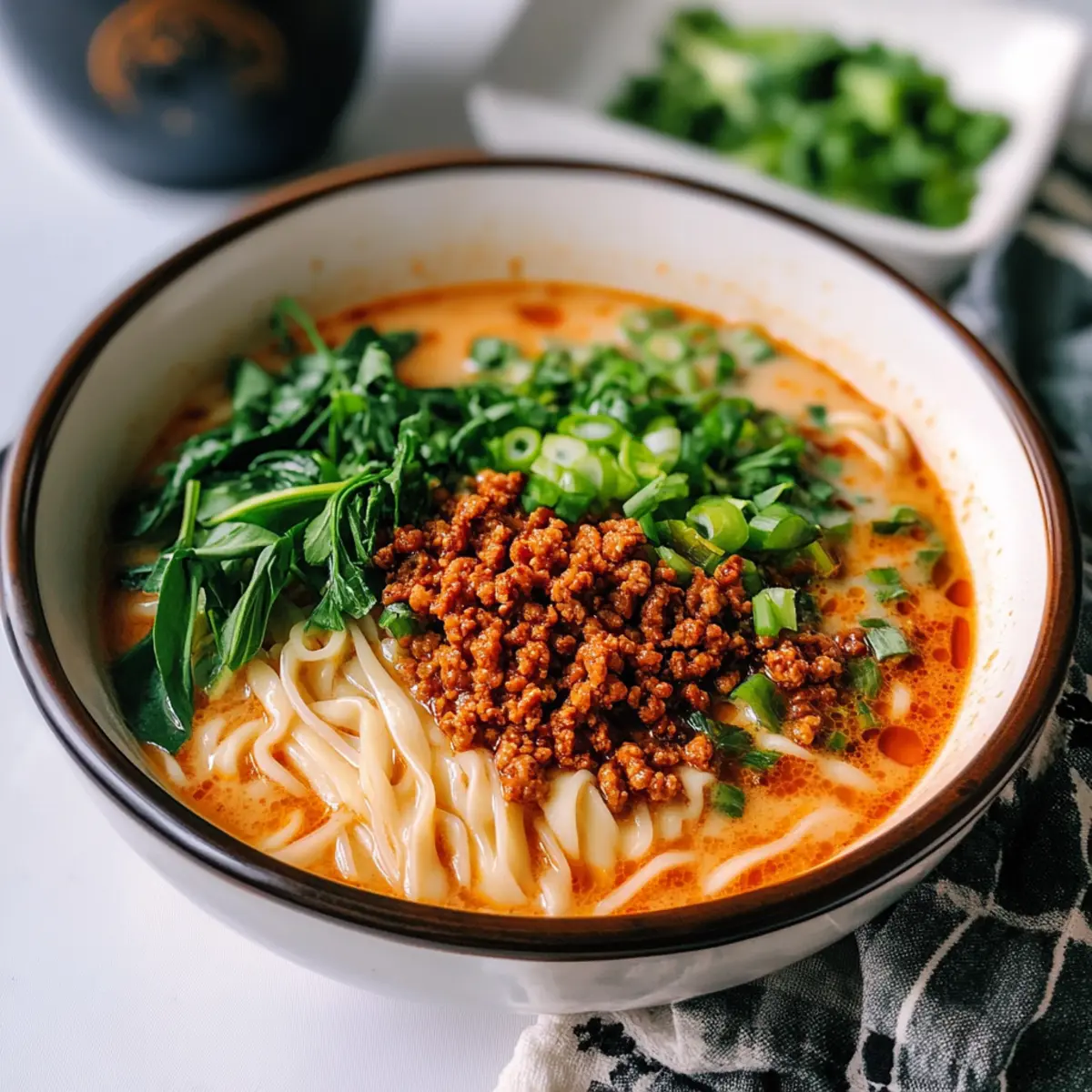
Spicy Tan Tan Ramen: Your New Favorite Comfort Bowl
Ingredients
Equipment
Method
- Marinate the pork with mirin and minced ginger, allowing it to sit for 15 minutes.
- Prepare the tare by whisking soy sauce, sesame paste, rice vinegar, sugar, and chili oil until smooth.
- Simmer chicken stock and oat milk in a large pot over medium heat, stirring occasionally.
- Blanch leafy greens in boiling water for 30-60 seconds and set aside.
- Cook marinated pork in a wok with vegetable oil until browned, then stir in spicy bean sauce and garlic.
- Cook ramen noodles according to package instructions, then drain.
- Assemble bowls with tare, hot broth, noodles, crispy pork, blanched greens, and scallions.
Leave a Reply